
How to Visit The Maldives on a Budget
January 1st, 2026
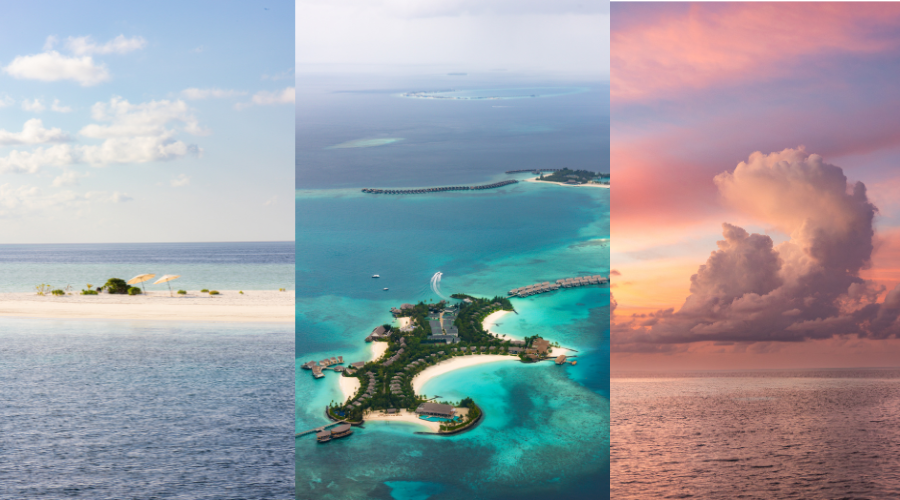
Visiting the Maldives is often the top of many bucket lists. When you see photos and videos online, it’s easy to see why. The pristine white-sand beaches, crystal clear turquoise water, and speckled private islands are the definition of paradise.
When I started traveling, the Maldives seemed like one of those faraway, unreachable places. Those islands and overwater bungalows were for the elite; those who didn’t blink dropped $20,000 on a single vacation. It was what I called a ‘lottery dream.’
However, the ‘lottery dream’ became a reality, but I didn’t win the lottery. In the fall of 2025, I spent nearly two weeks in the Maldives, island hopping and soaking up everything the tiny island country has to offer. I half hoped it would be a bit overrated, that all the hoopla I saw online wasn’t quite the reality.
But good/bad news: what you see online doesn’t even begin to do it justice. After 56 countries around the globe, the Maldives is my favorite tropical destination. I semi-hate to admit it, but it’s true.
But the good news is, there are plenty of ways to visit the Maldives on a budget. So if you’re dreaming of planning a trip, but not looking to spend tens of thousands of dollars, your dream is entirely within reach!
Here are all my tips for visiting the Maldives on a budget:
1. Opt for a Sailing Charter Instead of a Resort
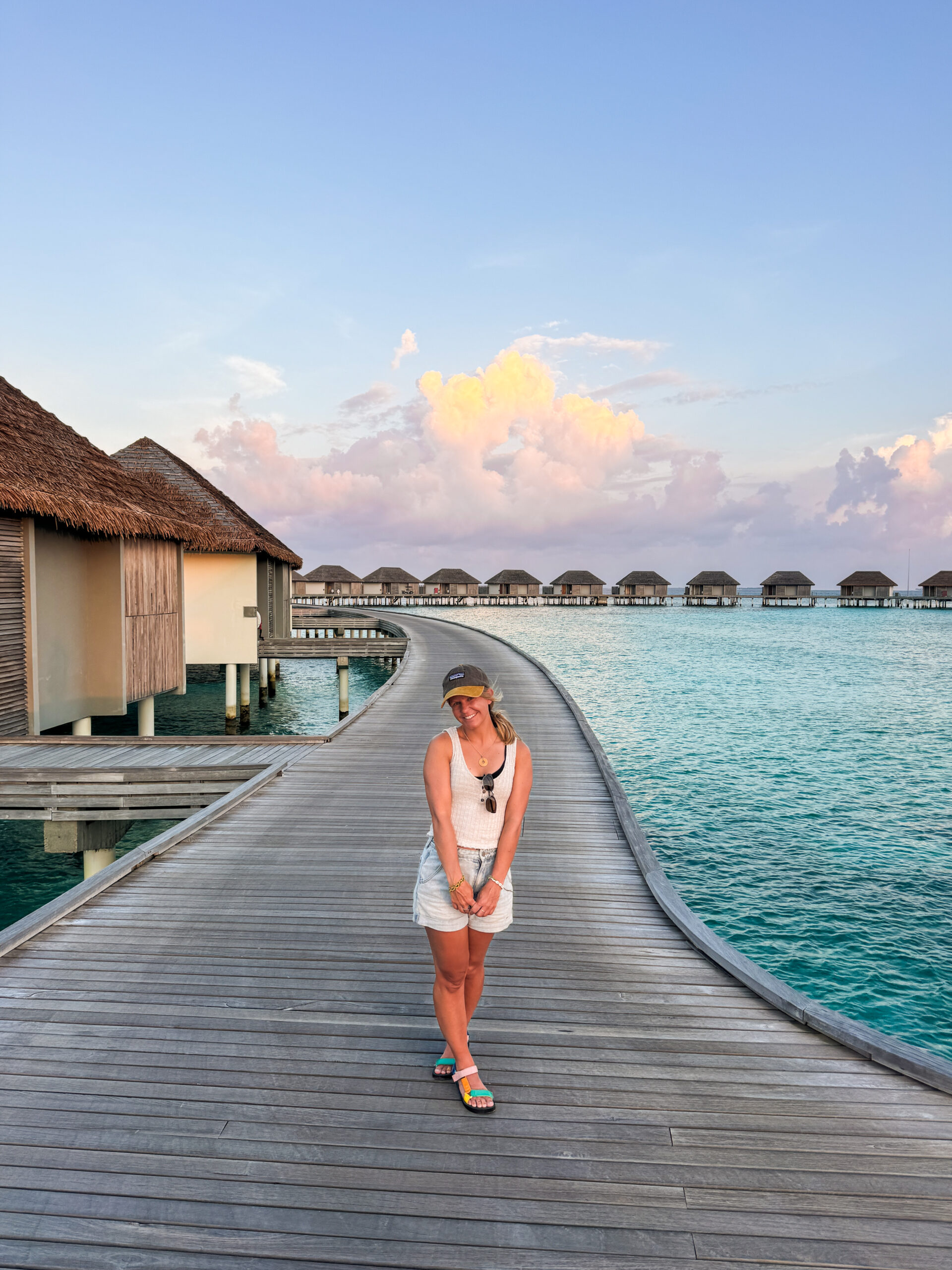
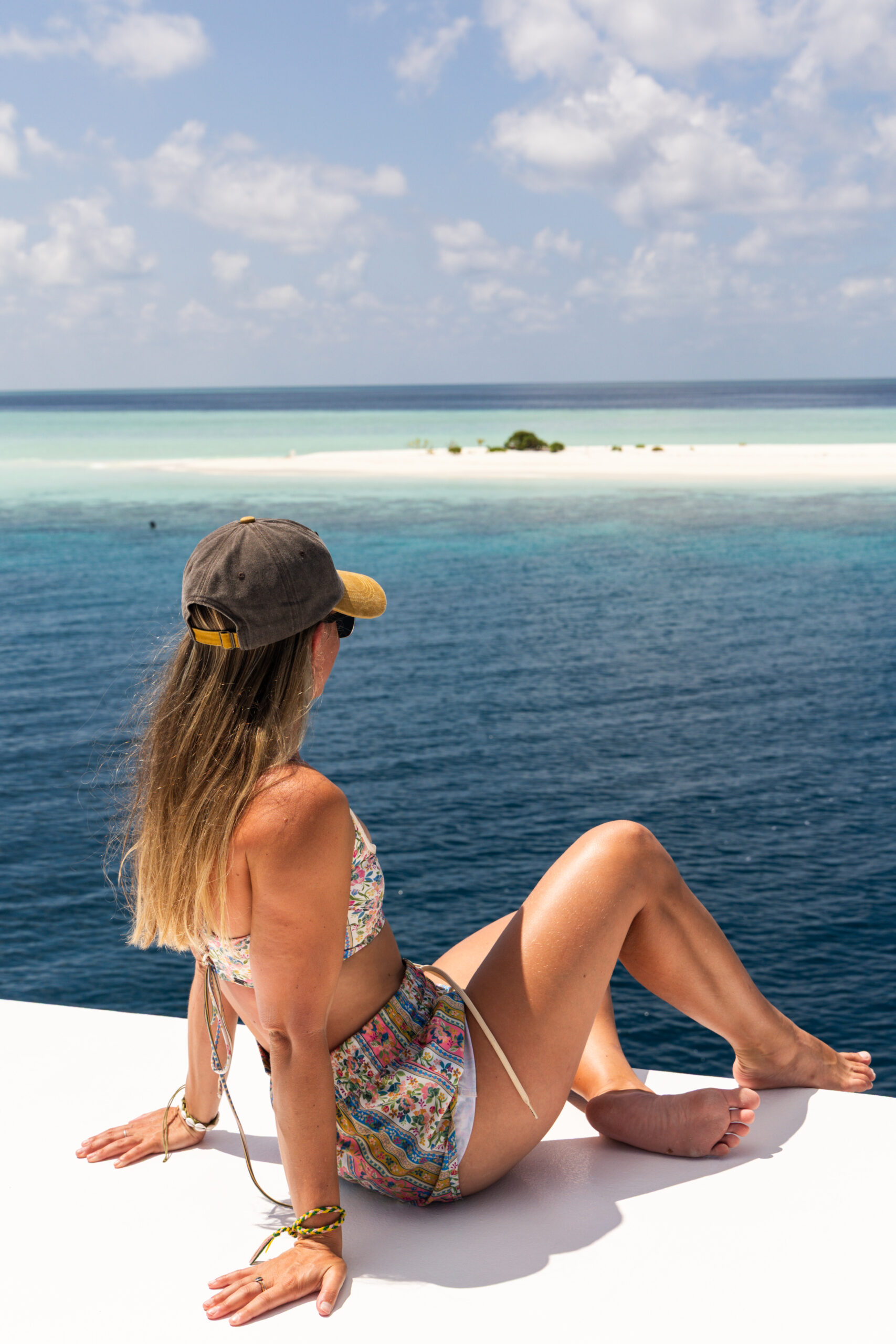
Our trip to the Maldives was divided into two parts: sailing & a resort stay. The sailing portion was the budget option, and it was my favorite. Here’s why:
- You aren’t stuck on one isolated island. We sailed to three separate atolls, along the way visiting both local islands, deserted islands, remote sandbars, and stunning snorkel areas.
- In most areas, we had them entirely to ourselves. In many resort areas, snorkel excursions are pricey, and you’re going to areas with a lot of other people. Sailing allows the ability to get far out into the atolls. We had entire islands to ourselves for sunsets, evenings, swimming, and exploring. Something that felt worth a million dollars.
- Snorkeling is included throughout the trip for the price, whereas one snorkel excursion from a resort can cost $300-$400 per person.
- The sailing trip lasted 7 days and cost $1800 per person. This price included all meals, a full boat staff (captain, first mate, chef), and a tour guide. Soft drinks & alcohol were not included. The upgraded boat option was $2200 per person.
- You could gather 8-12 friends and book your own private boat, or join a group that has set trips to the Maldives, like G Adventures.
2. Visit During the Off-Season
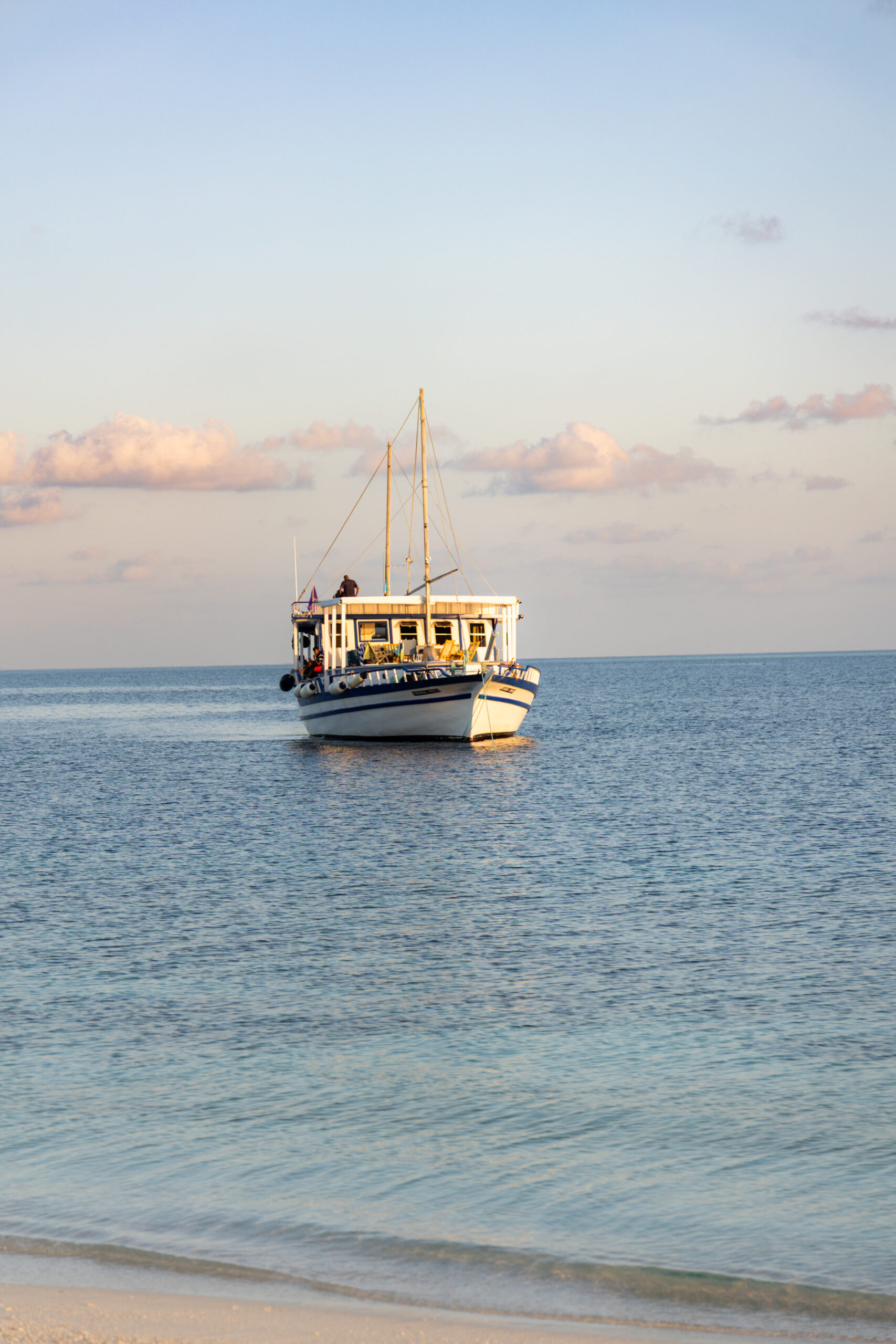
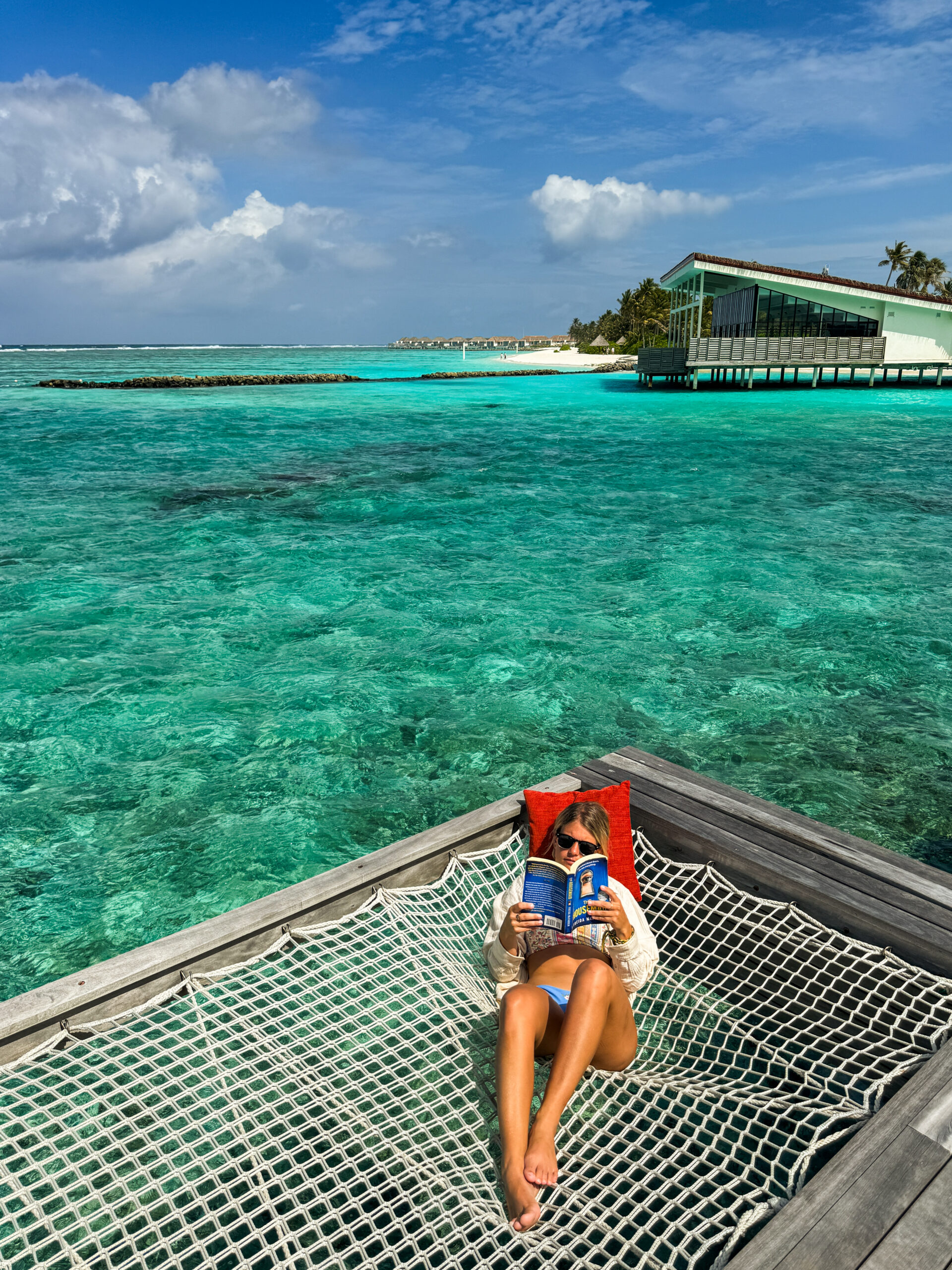
This one can be a gamble, but you can also save upwards of 60% at resorts if you visit during the rainy season. At the end of our trip, we found a deal on an overwater bungalow for ⅓ of the typical rate. However, I knew it was October, and the rates reflected the gamble of the weather. In total, we splurged on an overwater bungalow with a private pool at the luxury Radisson Blu Resort for 4 nights, and it cost $3,400, with the all-inclusive package for food + drink.
The cost of the same package during the busy season is $6,000- $8,000.
The trade-off? It did rain for the majority of our stay at the resort. The week before, on the boat, we had so much sun that we were hiding from it in the afternoon. However, once we moved to the resort, we had one hour of sun over 4 days. You could have perfect weather, but it’s not guaranteed during the rainy months.
3. Book a Resort That Doesn’t Require a Seaplane
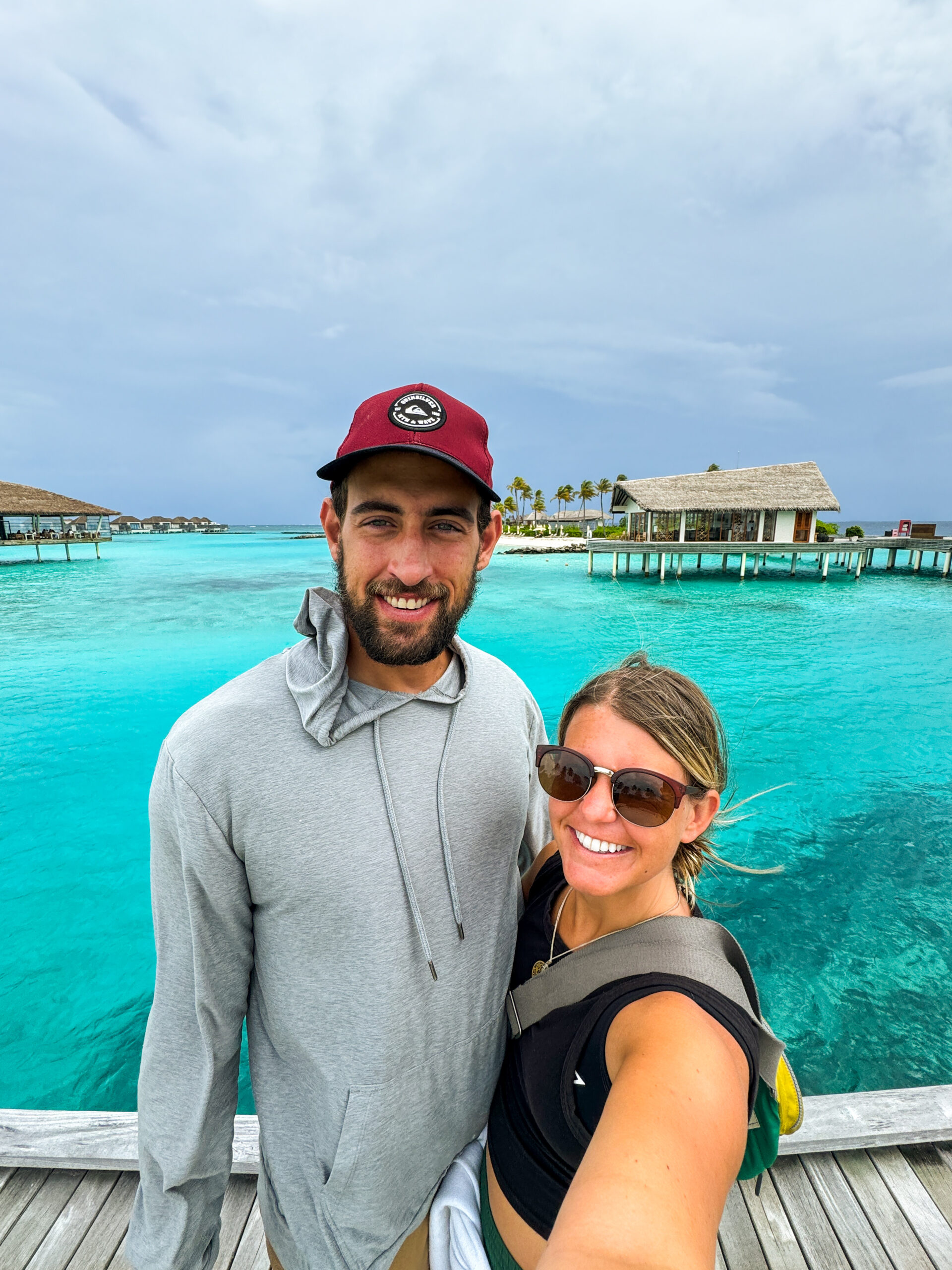
We loved our resort, but my one major mistake in planning was not properly researching how much seaplanes cost. Some resorts are ONLY accessible by seaplane, ours included. With our booking, we also got a “deal” for 50% round trip seaplane transfer from Male.
It was only once our trip got closer I realized just how much a seaplane transfer is. $500 per person, one way. So even with the 50% deal, we were still paying $1,000 for a 20-minute plane ride for two people. Ouch!!
There are PLENTY of resorts that are close enough to the main city of Male to be reached by ferry. So if budget is a concern, eliminate any resort that requires a seaplane transfer.
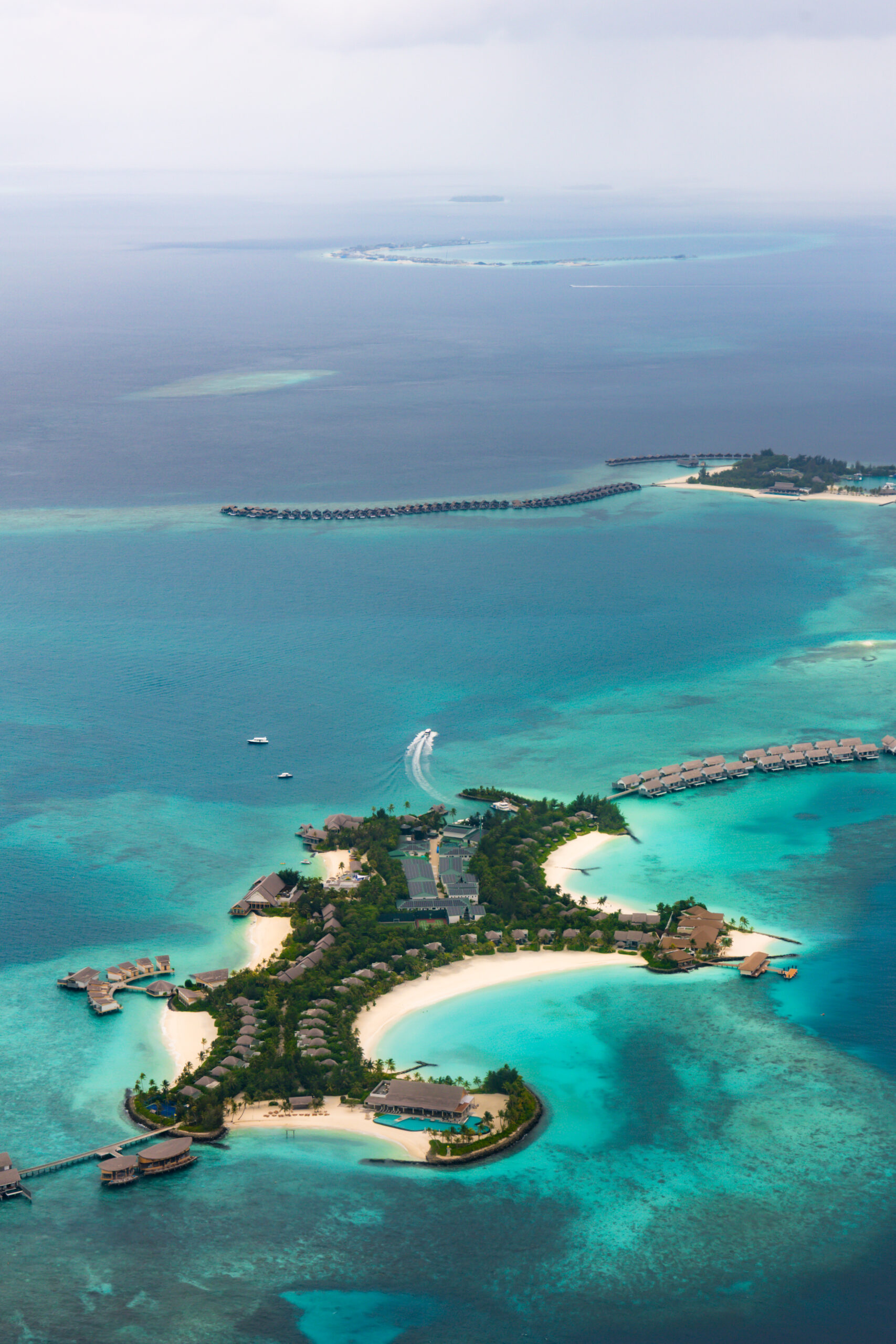
4. Stay on a Local Island
The Maldives consist of over 2,000 islands. Over 1,000 of these islands are private, with only 200-250 islands inhabited by Maldivian people, which are known as ‘local islands.’
If you’re looking for a more culture-rich experience in the Maldives, don’t just fly to a fancy resort where few dollars actually stay in the local community. Instead, spend a few of your days staying at a hotel or resort on a local island. Outside of the private resorts, the Maldives is actually a very affordable country!
Excursions from local islands are also way cheaper than anything offered through private resorts.
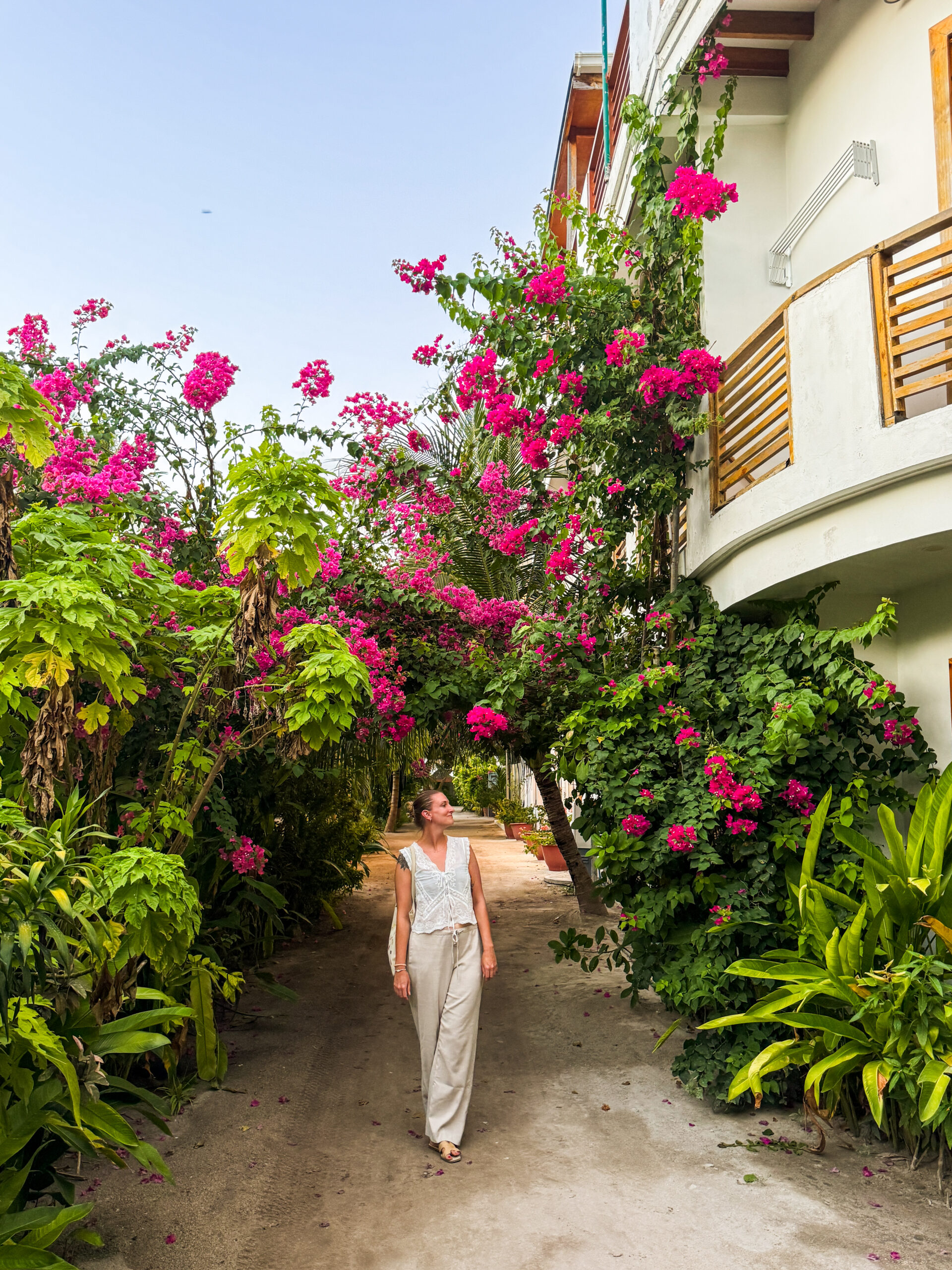
5. Book & Rebook If Needed
Most resorts & reservations are fully refundable until 14-30 days before arrival. Just because you book something, don’t stop looking for deals. I tracked prices at our resort for 6 months before I finally booked during a discounted price offer.
But I knew our booking was fully refundable until two weeks before our check-in day. And I continued to look at prices for our resort and other resorts for the next few months.
6. Book Resort All-Inclusive
Spending a little more on all-inclusive will save you A LOT of money in the long run.
At first, we did not book the all-inclusive package at our resort. But upon arriving, we realized that it is WAY more cost-effective to book the all-inclusive option. A cheeseburger with fries at our resort was $54 USD. A typical cocktail was $18. We upgraded to the basic all-inclusive, which included alcohol, for $115/day per person.
Other Very Important Things to Know About the Maldives
1. Bring USD, and do not exchange it for the local currency.
USD is the preferred currency in the Maldives. You’ll quickly notice that all prices, whether at a resort or a local island, are always listed in USD. They have their own local currency, the Maldivian Rufiyaa, but local vendors and resorts don’t like to use it. In fact, they will ask you to pay in USD if you have it.
The Maldivian Rufiyaa is also a non-convertible currency. This means you can transfer to the currency, but you cannot transfer it back. So if you have extra Maldivian Rufiyaa at the end of your trip, you’re stuck with it.
2. Alcohol is banned in the country outside of resorts & tourist-operated boats.
If you think you’re going to save money at your all-inclusive resort by stocking up on alcohol before you get there, think again. The Maldives is a strict muslim country, and alcohol is banned outside of tourist resorts and licensed tourist boats. There are no liquor stores, sandy beachside bars, or pub crawls. If you think you’re going to head to a local bar and order a beer, think again. It’s illegal to bring alcohol into the country, and it will be confiscated at customs.
3. They have USD dispensing ATMs, but they do not work with foreign cards.
Make sure you bring enough USD for tipping & souvenirs, as it can be difficult to get USD once you’re in the Maldives. Because USD is the preferred currency, there are a handful of USD dispensing ATMs across the islands, but most of them reject foreign cards. The ATMs that accept foreign cards dispense Maldivian Rufiyaa, which is not recommended for use.
Our resort also didn’t have an ATM on-site. I’m sure some might, but I would come prepared with enough USD to last you the duration of your stay.

At any given moment, Shalee is either lost, hunting for ice cream, or obsessively planning her next adventure.
Born and raised in rural Michigan, she began exploring the shores of Great Lakes as a teen, often sleeping in her car to save money. Eventually, her urge to explore pushed beyond her Midwest borders. Today, Shalee shares her tips and stories to thousands of readers interested in adventure and outdoor tourism. Her pack now includes two spunky hiking cats and her partner, Josh. Learn more about her here.
Join the Adventure